
A homeowner in Rockrimmon wakes up to a furnace that won't kick on, grabs their phone, and types "furnace repair near me" before they've even finished their coffee. Three businesses show up at the top of the screen with a little map, star ratings, and a "call now" button. Two of them are not the best HVAC company in Colorado Springs, but they are the ones that got found. That gap between doing great work and being visible is exactly what local SEO closes.
- The map pack gets the clicks: Three local listings appear above organic results for most service searches, and they capture the majority of clicks before a searcher ever scrolls further.
- Google Business Profile is the foundation: Category selection, service areas, photos, and posts all feed directly into whether your business shows up for the searches that matter.
- Citations and reviews build trust signals: Consistent business information across directories and a steady flow of recent reviews tell Google your business is active and credible.
- On-site content still matters: Service pages built around specific jobs and neighborhoods reinforce the relevance signals Google uses to match searchers with businesses.
- Colorado Springs has its own competitive rhythm: Seasonal demand swings, a growing Front Range footprint, and specific neighborhood searches all shape what local SEO should prioritize here.
- Consistency beats a one-time fix: Map pack rankings shift based on ongoing activity, not a single setup project, so contractors who stay active outrank those who set it and forget it.
1. Why the Map Pack Matters More Than Page One Rankings
For most home service searches, the traditional blue-link organic results are pushed down the page, sometimes completely below the fold on mobile. What shows up first is the map pack: a cluster of three business listings with a map, star ratings, hours, and a call or directions button. For a plumber, electrician, towing company, or HVAC contractor, this is the real page one. Ranking in traditional organic search still matters, but if your business isn't in that top-three map cluster, a huge share of ready-to-buy searchers will never scroll down far enough to find you.
This matters even more for service businesses because the searches driving the map pack are almost always high-intent. Nobody searches "AC repair Colorado Springs" out of idle curiosity. They have a broken system, a leaking pipe, or a car that needs towing right now, and they are choosing from whichever three businesses Google decides to show them. Winning that placement is not a vanity metric. It is the difference between the phone ringing today and a competitor getting the job instead.
What the Map Pack Looks Like and Why Searchers Click It
The map pack shows a business name, category, star rating, review count, hours, and often a photo, all in a compact format designed for quick decisions. Searchers scanning on a phone can compare three options in seconds without clicking through to a single website. That convenience is exactly why click-through rates on map pack listings run high relative to organic links further down the page.
The Local Intent Search Behind Near Me
Searches like "plumber near me" or "towing company Colorado Springs" carry what Google calls local intent, meaning the searcher wants a business physically close enough to help them right now. Google's own guidance on local search ranking factors confirms that proximity, relevance, and prominence are the three pillars behind who shows up.
| Attribute | Map Pack Listing | Organic Search Result |
|---|---|---|
| Screen position | Top of page, above organic links | Below the map pack, often below the fold on mobile |
| What ranks it | Google Business Profile signals, reviews, proximity | Website content, backlinks, on-page SEO |
| Searcher decision speed | Fast, compare-and-call | Slower, requires a click-through to evaluate |
| Best for | Immediate, local, high-intent searches | Research-phase searches and broader service area terms |
| Primary optimization lever | Google Business Profile | Website and content strategy |
2. How Google Ranks Contractors in the Map Pack
Google has been consistent for years about the three factors that drive local rankings: relevance, distance, and prominence. Relevance is how well your Google Business Profile and website match what the searcher is looking for. Distance is how close your business is to the location implied in the search. Prominence is how well-known and well-reviewed your business is, both online and in the real world.
Relevance: Matching What the Searcher Typed
Relevance comes from how accurately your business information describes what you do. If your Google Business Profile lists a generic "contractor" category when you specialize in HVAC repair, you're telling Google you're less relevant to "furnace repair" searches than a competitor who chose the precise category. The same logic applies to your website: a service page dedicated to water heater installation will out-rank a vague "our services" page every time a searcher types something specific.
Distance: Why Service Area Setup Matters
Distance ranking depends heavily on how you've configured your service area in your Google Business Profile. A contractor who serves Colorado Springs, Fountain, and Monument needs those areas explicitly defined. Businesses without a storefront but with legitimate service vehicles still need an accurate primary address on file with Google, even if it's hidden from public view, because Google uses it to calculate distance to searchers.
Prominence: The Trust Signal Google Can't Ignore
Prominence is built from review volume, review recency, star rating, citation consistency, and how often your business is mentioned or linked to online. A ten-year-old plumbing company with 200 reviews and a 4.8 average has more prominence than a newer competitor with 15 reviews, all else being equal. This is the factor most within a business owner's daily control, because it grows through consistent effort rather than a one-time technical fix.
3. Optimizing Your Google Business Profile for Map Pack Visibility
Your Google Business Profile is the single highest-leverage asset in local SEO for a contractor. It's free, it's the first thing Google shows searchers, and it's also the thing most service businesses set up once and never touch again. A complete, accurate, and regularly updated profile does three things at once: it improves your relevance match for specific searches, it gives Google more content to associate with your business, and it builds the trust signals that turn a map pack click into an actual phone call.
Choosing the Right Primary and Secondary Categories
Your primary category carries more ranking weight than any other single field on your profile. An HVAC company should choose "HVAC contractor" as primary, not "contractor" or "home improvement," and should add secondary categories like "air conditioning repair service" and "furnace repair service" if those match the actual work performed. Getting this wrong is one of the most common and most fixable mistakes local businesses make.
Photos, Posts, and Signs of Active Management
Google Business Profile allows regular posts, and profiles that use them consistently tend to show stronger engagement signals. Uploading recent job-site photos, not stock imagery, also reinforces authenticity. A towing company posting photos of an actual truck on an actual call reads very differently to both Google and a searcher than a generic stock photo of a flatbed.
Q&A and Attributes That Round Out the Profile
The Q&A section and business attributes (24-hour service, free estimates, and similar tags) are underused fields that add relevance signals at almost no cost. Seeding a few genuinely useful questions and answers, like whether you offer emergency weekend service, gives searchers the exact information they're looking for before they even click through to the website.
4. On-Page and Website Signals That Support Local Rankings
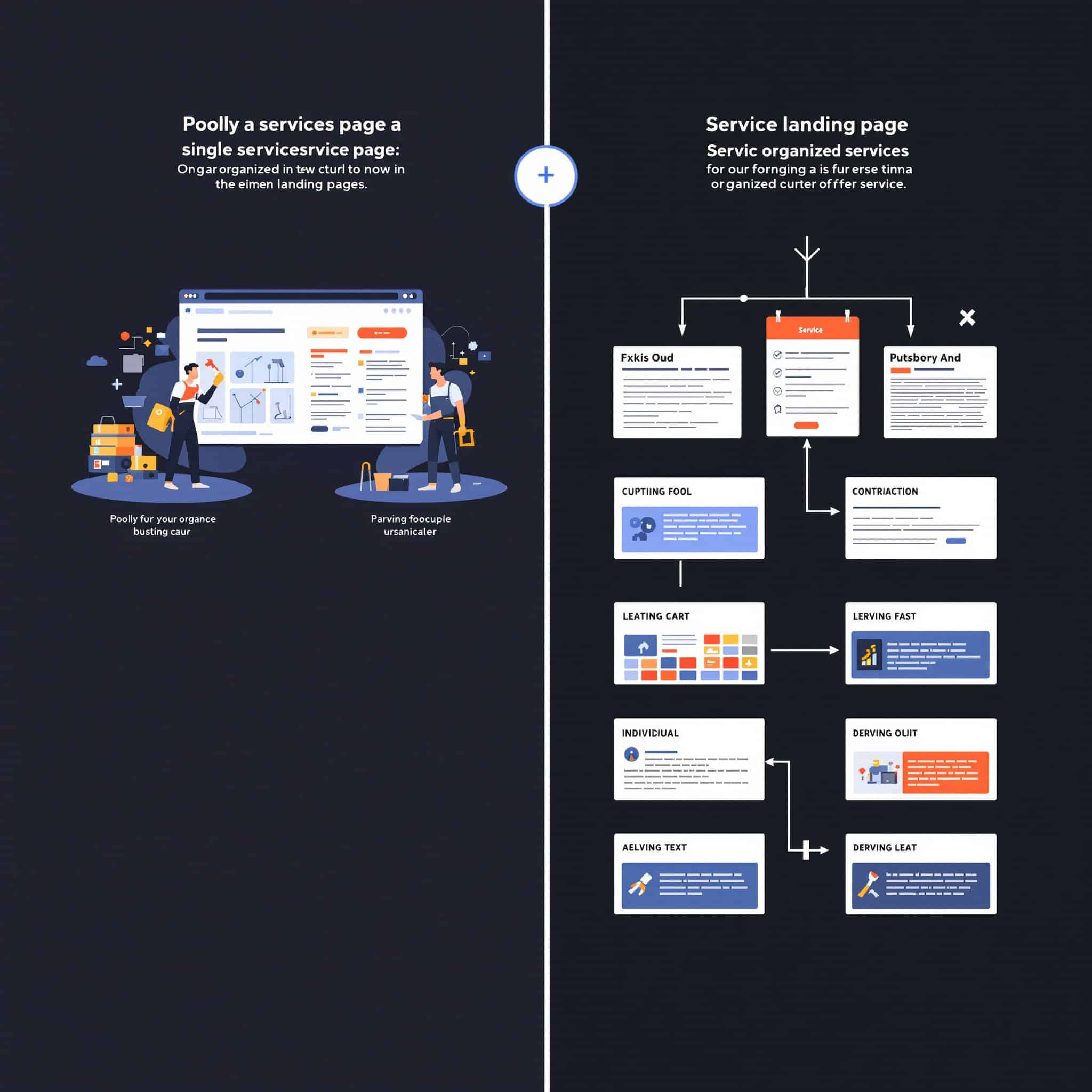
Your Google Business Profile gets you into the map pack conversation, but your website is what backs up the claim once Google, and the searcher, take a closer look. Building out dedicated pages for each core service, rather than lumping everything onto a single "services" page, gives Google far more specific content to match against far more specific searches.
Service Pages Built Around Specific Jobs
A plumbing company should have a distinct page for water heater repair, one for drain cleaning, and one for emergency leak response, each with real detail about how the job is done. Google's algorithms are built to detect and discount thin, duplicated content that just swaps the city name across pages.
Local Landing Pages for Multiple Service Areas
Contractors serving multiple towns across the Front Range benefit from individual location or service-area pages rather than a single page that lists all three towns in a sentence. Each page should include specifics relevant to that community, because search engines reward genuine local relevance over keyword insertion.
Technical Basics: Speed, Mobile, and Schema
Most local searches happen on a phone, which makes mobile page speed a real ranking and conversion factor. Structured data (schema markup) that clearly labels your business name, address, phone number, and service categories helps search engines parse your site accurately. Reference Google's developer documentation on local business structured data if your web developer needs the technical specification.
Building Authority Through Citations and Reputation Signals
Prominence is largely built outside your website and your Google Business Profile, through the broader footprint of how your business appears across the internet. A citation is any online mention of your business name, address, and phone number. When that information is inconsistent across directories, it creates confusion that search engines interpret as a trust problem.
Auditing and Cleaning Up NAP Consistency
Start with the directories that carry the most authority: Google Business Profile itself, Bing Places, Apple Maps, Yelp, and industry-specific directories relevant to your trade. An audit typically uncovers old addresses from a business move, duplicate listings created by mistake, or outdated hours that never got updated after a schedule change.
Building a Review Generation System
The businesses that win on reviews treat it as a system, not an afterthought. That means a consistent process - texting a review link right after a completed job while the experience is fresh - rather than a sporadic ask every few months. Responding to every review, positive or negative, also matters, because it signals active management to both future customers and to Google.
6. Local SEO Opportunities Specific to Colorado Springs and the Front Range
Colorado Springs's rapid growth along the Front Range means search volume is shifting outward as fast as the population is. A contractor optimized only for "Colorado Springs" searches without accounting for surrounding communities like Falcon, Fountain, Security-Widefield, and Monument is leaving real search volume on the table.
Seasonal demand shapes local SEO priorities here in a way that a generic national SEO playbook misses entirely. Furnace and heating searches spike hard once the first cold snap hits, while air conditioning searches climb through the summer months. Building content, GBP posts, and seasonal service pages that anticipate these shifts gives a contractor a meaningful head start over competitors who only update their marketing once the calls start coming in.
Growth Corridors Changing the Local Search Map
Areas like Banning Lewis Ranch, Cordera, and the broader northeast side of the city have added significant new housing in recent years. New homeowners often rely entirely on Google rather than word of mouth from neighbors they haven't met yet, making review freshness and profile completeness especially valuable in a market with constant new-resident search activity.
Elevation and Climate-Specific Service Demand
Colorado Springs sits above 6,000 feet, and that elevation affects everything from HVAC system sizing to roofing material performance in intense UV exposure. Contractors who speak directly to these local conditions in their content, rather than generic national copy, signal genuine local expertise that both searchers and Google's relevance algorithms respond to.
7. Common Mistakes That Keep Contractors Invisible in the Map Pack
The most common mistake is treating Google Business Profile as a one-time setup task rather than an ongoing channel. A profile that hasn't had a new photo, post, or review response in six months signals inactivity to Google, even if the business itself is thriving. The second most common mistake is choosing overly broad or inaccurate GBP categories.
Ignoring negative reviews or responding defensively does more damage than the review itself. Businesses that have moved locations, changed phone numbers, or rebranded often leave a trail of outdated citations that undercut newer, accurate ones. Multiple listings for the same business actively compete against each other and dilute review counts. Google's own guidelines on Business Profile duplicate listings outline exactly how to identify and merge these.
FAQs
How long does it take to rank in the Colorado Springs map pack?
Most contractors see measurable movement within a few months of consistent Google Business Profile optimization, citation cleanup, and review growth, though timelines vary based on how competitive the specific service category is.
Does my business need a physical storefront to rank in the map pack?
No. Service-area businesses without a public storefront can still have a Google Business Profile, but the address must be entered accurately and hidden from public display, with service areas clearly defined instead.
How many Google reviews does a contractor need to rank well?
There's no fixed number, since review volume is weighed relative to competitors in the same market and category. A steady, ongoing flow of recent reviews matters more than hitting any specific total.
Can I manage my own Google Business Profile without hiring an agency?
Yes, many contractors manage their own GBP successfully, especially with a consistent routine for photos, posts, and review responses. The tradeoff is time, since doing it well requires ongoing weekly attention that competes with running daily operations.
What's the difference between local SEO and paid Google Ads for contractors?
Local SEO builds ongoing organic map pack and website visibility that compounds over time without a per-click cost. Google Ads delivers immediate visibility at the top of search results but stops the moment the budget stops, making the two strategies complementary rather than interchangeable.
Conclusion
Ranking in the Colorado Springs map pack comes down to three things working together: a Google Business Profile that's accurate, complete, and actively maintained, a website that backs up those claims with real service-specific content, and a reputation built through reviews and consistent citations that signals prominence to Google over time. None of these pieces work in isolation, and neglecting any one of them puts a ceiling on how high a contractor can rank. The Front Range's growth, seasonal demand swings, and military-driven population turnover all add local texture that a generic national SEO approach simply won't account for.
Frostbyte Creatives works with HVAC contractors, plumbers, towing operators, roofers, and other service businesses across Colorado Springs and the Front Range to build exactly this kind of integrated local SEO strategy - one grounded in the specifics of this market rather than a one-size-fits-all template.
Schedule a strategy session with the Frostbyte Creatives team to get a clear read on where your Google Business Profile and local SEO currently stand and what specific steps would move you into the Colorado Springs map pack. We'll walk through your current visibility together and outline exactly what it would take to start capturing more of those high-intent, ready-to-hire local searches.