
Picture a homeowner in Colorado Springs settling in on a Tuesday night, streaming a show on their Roku after a long day. Thirty seconds into the next episode, your HVAC company's ad plays - targeted, unskippable, and shown to someone who actually lives in your service area. That is connected TV advertising in practice, and it is changing what local service businesses can do with a realistic marketing budget.
- CTV is TV advertising without the broadcast price tag: Connected TV lets local service businesses run ads on streaming platforms at a fraction of what traditional broadcast TV costs, with far tighter targeting.
- Your audience is already there: A large and growing share of adults stream content daily on devices like Roku, Amazon Fire TV, and Apple TV, including in Colorado Springs and across the Front Range.
- Targeting is the real advantage: Unlike broadcast TV, CTV lets you target by zip code, household income, and even specific behaviors - so your budget reaches the households most likely to need your service.
- Video builds trust that search ads cannot: A 30-second ad showing your team, your trucks, and your work builds brand recognition that a text ad in a search result simply cannot replicate.
- Measurement is real: Modern CTV platforms tie ad exposure to outcomes like website visits and phone calls, giving you actual data rather than estimated reach numbers.
1. What CTV Advertising Actually Is
Connected TV advertising refers to video ads delivered through internet-connected television devices. These include smart TVs with built-in streaming apps, streaming sticks like Roku and Amazon Fire TV, and game consoles used for streaming. When someone watches Hulu, Peacock, Tubi, or any number of ad-supported streaming apps on their TV, the ads they see are often CTV ads. The key distinction from traditional TV is that CTV is programmatic - meaning ads are bought and targeted digitally, not negotiated through a broadcast station with fixed rates and broad audience assumptions.
For a service business owner, the practical implication is significant. Traditional broadcast TV asks you to pay for everyone watching a channel in a metro area, most of whom will never need your service. CTV lets you pay specifically to reach households that match your ideal customer profile, in the neighborhoods you actually serve. That shift in precision is what makes this channel relevant to businesses operating at the local level.
How CTV Differs from Traditional TV
Broadcast and cable TV advertising have been out of reach for most local service businesses for a simple reason: the minimum buys are large, the audience targeting is blunt, and the measurement is mostly estimated. CTV changes all three of those dynamics.
| Attribute | Traditional TV | CTV Advertising |
|---|---|---|
| Minimum budget | Often tens of thousands per market cycle | Accessible at much lower monthly minimums |
| Geographic targeting | DMA (broad metro area) | Zip code or radius-level precision |
| Audience targeting | Demographic estimates by daypart | Behavioral, income, household data |
| Ad skippability | Varies by placement | Often unskippable in premium inventory |
| Measurement | Estimated ratings and reach | Verified impressions, site visits, call tracking |
| Creative lead time | Weeks with broadcast requirements | Faster production and revision cycles |
The shift from estimated reach to verified delivery is worth emphasizing. When you buy a broadcast TV spot, the station provides a ratings estimate. When you run a CTV campaign, the platform confirms how many times your ad was delivered to a specific household on a specific device. That accountability matters when you are making real decisions about where your marketing dollars go.
The Difference Between CTV, OTT, and Streaming Ads
These terms get used interchangeably and it creates unnecessary confusion. OTT stands for "over-the-top" and refers to any video content delivered over the internet, bypassing traditional cable or satellite. CTV is a subset of OTT - it specifically refers to content watched on a television screen via a connected device. Mobile video ads running on a phone or tablet are OTT but not CTV. For a service business, this distinction matters because CTV inventory - ads appearing on actual TV screens - tends to command more attention and carry more brand weight than mobile pre-roll.
2. Why CTV Makes Sense for Service Businesses Specifically
Search advertising - Google Ads - is essential for capturing demand that already exists. When someone types "emergency plumber near me" at 10pm, a search ad is exactly the right tool. But not every customer is in emergency mode when they first encounter your brand. Many homeowners in Colorado Springs start thinking about HVAC maintenance, roof replacement, or electrical upgrades weeks or months before they search. CTV reaches them during that consideration window, building familiarity so that when they do search, they recognize your name.
This is the role that TV advertising has always played for major brands - awareness and trust at scale. CTV makes that same mechanism available at local service business scale, with the added benefit of targeting the households most likely to actually call you.
Building Brand Recognition in a Competitive Local Market
Colorado Springs has a saturated market for most service trades. HVAC companies, plumbers, roofers, and electricians are all competing for the same searches, the same map pack positions, and the same Google Ads auction. In that environment, brand recognition becomes a measurable competitive advantage. A homeowner who has seen your ad three times on their streaming TV is far more likely to click your search result - or call your number directly - than someone encountering your name for the first time.
When CTV Works Best Alongside Other Channels
CTV is not a standalone lead generation channel in the way search ads are. It works best as part of a coordinated strategy where search, local SEO, and CTV each do what they are built for. Think of it this way: CTV plants the name, Google Ads capture the intent, and a well-optimized Google Business Profile closes the trust gap at the moment of decision. Businesses that treat CTV as one layer in that stack - rather than a replacement for any of it - see the clearest results.
Seasonal Timing for Front Range Service Businesses
Colorado Springs and the broader Front Range have genuine seasonal demand patterns. HVAC load shifts dramatically between spring and fall. Roofing demand spikes after hail season. Landscaping and irrigation businesses see clear spring ramp-ups. CTV campaigns can be timed to run in the weeks before those demand peaks - building awareness during the consideration phase so your brand is already familiar when the phone calls start. That kind of timing flexibility, adjustable week by week, is another area where CTV outperforms traditional broadcast buys that lock in schedules months in advance.
3. Targeting: The Capability That Changes the Math
The thing that makes CTV genuinely different for a local service business is not the format - it is the targeting. When you run a CTV campaign through a programmatic platform, you are not just buying "adults 25-54 in the Colorado Springs DMA." You are specifying the zip codes your trucks can actually reach, filtering for households in income ranges that align with your services, and in some cases layering in behavioral data - people who have been researching home improvement projects, HVAC systems, or similar categories.
That precision fundamentally changes the economics. Your budget is not subsidizing impressions in Pueblo or Monument when your business only serves the city and its immediate suburbs. Every dollar works inside the geographic and demographic boundaries you set.
Geographic and Household-Level Targeting
CTV targeting can go below the DMA level to zip codes, which matters enormously for service businesses with defined territories. A plumbing company that serves the central and east sides of Colorado Springs has no reason to pay for impressions in the Westside or Rockrimmon. Zip code targeting prevents that waste. Some platforms also offer household-level matching, which can layer in data about homeownership, home age, or household composition - factors that correlate strongly with demand for HVAC, roofing, and other home services.
Behavioral and Intent-Based Audiences
Beyond geography, programmatic CTV platforms allow targeting based on audience segments built from behavioral data. Households that have been actively researching home services categories, recently moved, or shown purchase intent signals for specific product categories can be identified and targeted. This is not perfectly precise - it is probabilistic - but it meaningfully increases the likelihood that your impressions are landing in front of relevant households rather than randomly within a geographic boundary.
Frequency and Exposure Strategy
One practical detail that matters for service businesses: a single ad exposure rarely produces a lead. The value of CTV comes from repeated, consistent exposure to your target audience over a sustained period. Most practitioners target a frequency of somewhere between three and seven impressions per household over the campaign period - enough to build recognition without crossing into overexposure. Your campaign setup should reflect this by either capping frequency or allocating enough budget to achieve meaningful reach rather than a handful of impressions spread too thin.
4. Creative Considerations for Service Business CTV Ads
A CTV ad is typically 15 or 30 seconds. It often runs unskippable, especially in premium streaming inventory. That combination of short format and captive attention means the creative has to work efficiently. The best service business CTV ads do three things: establish who you are in the first five seconds, show evidence of the work or the team, and close with a clear, memorable call to action. They do not try to explain everything. They try to make a homeowner think "I recognize that company" when they eventually search for the service you provide.
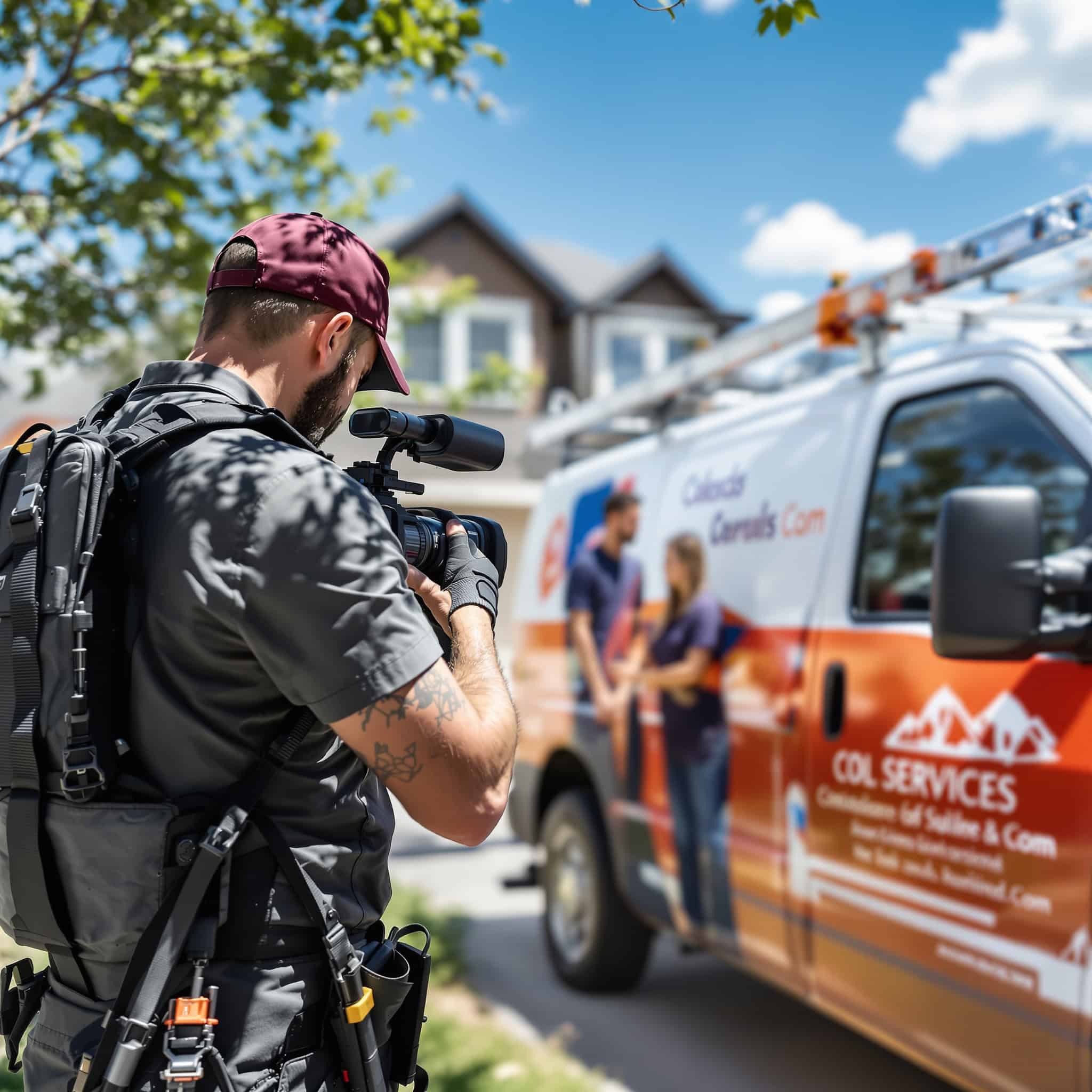
Investing in decent production quality matters here. A blurry, poorly lit ad on a 65-inch television screen will do more harm than good. The bar is not a national broadcast commercial - it is clean, professional, and credible. A branded truck, a uniformed technician, a satisfied customer, and a clear logo treatment can accomplish everything a service business CTV ad needs to accomplish.
What Makes a 30-Second Service Business Ad Work
The structure that tends to perform well for local service businesses is straightforward: open with a specific problem the viewer might have ("Your AC shouldn't be working this hard in July"), move to your solution and your team, and close with your name, phone number, and a line that is easy to remember. Avoid the instinct to cram in every service you offer. One service category, one clear message, one memorable close.
Video Production at a Realistic Scale
You do not need a broadcast TV production budget to run effective CTV ads. Many service businesses in Colorado Springs produce usable creative with a half-day shoot, a good camera operator, and a short script. What matters more than production polish is authenticity - real trucks, real technicians, real work environments tend to outperform polished but generic stock footage because they communicate specificity. The viewer can tell the difference between a local business that actually serves their neighborhood and a generic commercial that could be for any company anywhere.
5. Measurement: What to Track and What to Ignore
One of the persistent complaints about traditional TV advertising from small business owners is that the measurement never felt real. Ratings estimates, reach projections, and frequency assumptions are useful for media planning but they do not tell you whether anyone called. CTV changes this meaningfully, though it still requires realistic expectations about what you can and cannot directly attribute.
Verified impressions - the number of times your ad was actually delivered to a device - are a baseline you can trust. Beyond that, platforms can track site visits that occur following an ad exposure, and call tracking integrations can log phone calls that happen within a defined window after a viewer sees your ad. These are not perfect attribution models, but they are far more grounded than what traditional TV ever provided.
Metrics That Matter for Local Service Businesses
The metrics worth tracking for a service business CTV campaign are reach (unique households exposed), frequency (average impressions per household), site visit lift (increase in direct and branded search traffic during the campaign), and phone call volume against your baseline. Completion rate - the percentage of viewers who watch your ad to the end - tells you whether your creative is holding attention. A very low completion rate on a skippable placement suggests a creative problem worth fixing.
Setting Realistic Expectations for the First Campaign
CTV is a brand-building channel, which means results compound over time. A first campaign over 30 to 60 days is unlikely to produce a direct, traceable surge in leads - and that is the right expectation to set. What a well-run first campaign should produce is a measurable increase in branded search volume (people searching for your business by name) and a baseline of verified impression data you can build from. Businesses that treat CTV as a long-game awareness investment - the way any serious brand treats television - get the results. Businesses that expect immediate lead flow from a single short campaign are measuring the wrong thing.
Common Questions About CTV Advertising for Local Business
How much does CTV advertising cost for a small service business?
CTV campaigns are priced on a cost-per-thousand-impressions (CPM) basis, and the entry point is far lower than traditional broadcast TV. Meaningful local campaigns can run at monthly budgets that fit a small business marketing plan. The right budget depends on your market, category competition, and goals - a strategy consultation will give you a realistic number for Colorado Springs specifically.
Can I target my exact service area with CTV ads?
Yes. CTV platforms support zip code-level targeting, which means you can restrict your campaign to the specific neighborhoods and communities your business actually serves. You are not paying for impressions in parts of the metro you cannot reach.
Do CTV ads work for service businesses that rely on emergency calls?
CTV builds brand awareness, not instant call volume, so it complements emergency-call businesses rather than replacing their search ads. The value is that when a homeowner has an emergency, they are more likely to call a company they already recognize. CTV primes that recognition over time.
How is CTV advertising different from running a YouTube ad?
YouTube ads are typically watched on a phone, tablet, or computer - they are OTT but not CTV. CTV ads run on television screens via streaming apps on connected devices. CTV inventory generally commands more attention because it is on a TV screen in a household viewing context, and premium CTV placements are often unskippable in ways that YouTube's TrueView format is not.
Do I need a professional video to run a CTV campaign?
Not necessarily a broadcast-level production, but quality matters. Your ad will play on large TV screens, so shaky footage or poor audio will undermine your brand. A focused half-day shoot with a professional videographer producing a clean 30-second spot is usually sufficient for a local service business to run effective CTV campaigns.
Conclusion
CTV advertising has moved from a "someday" channel to a practical option for service businesses operating at local scale. The combination of television-level creative impact, digital-level targeting precision, and pricing that does not require a broadcast TV budget makes it worth serious consideration for any Colorado Springs contractor or service trade business looking to build lasting brand presence in a competitive market.
The businesses that will benefit most are those running CTV as part of a coordinated strategy - search ads capturing active demand, local SEO earning map pack visibility, and CTV building the brand recognition that makes both of those channels work harder. None of these channels is optional; they are each doing a different job in the same customer's journey.
Frostbyte Creatives works with service businesses across Colorado Springs and the Front Range to build exactly this kind of integrated strategy - including CTV campaigns scaled to real local budgets, not broadcast media minimums.
Schedule a strategy session with the Frostbyte Creatives team to find out whether CTV advertising belongs in your current marketing mix and how it fits alongside the search and local SEO work that drives your leads today. We will show you what realistic targeting, creative, and budget options look like for your specific service area and category.