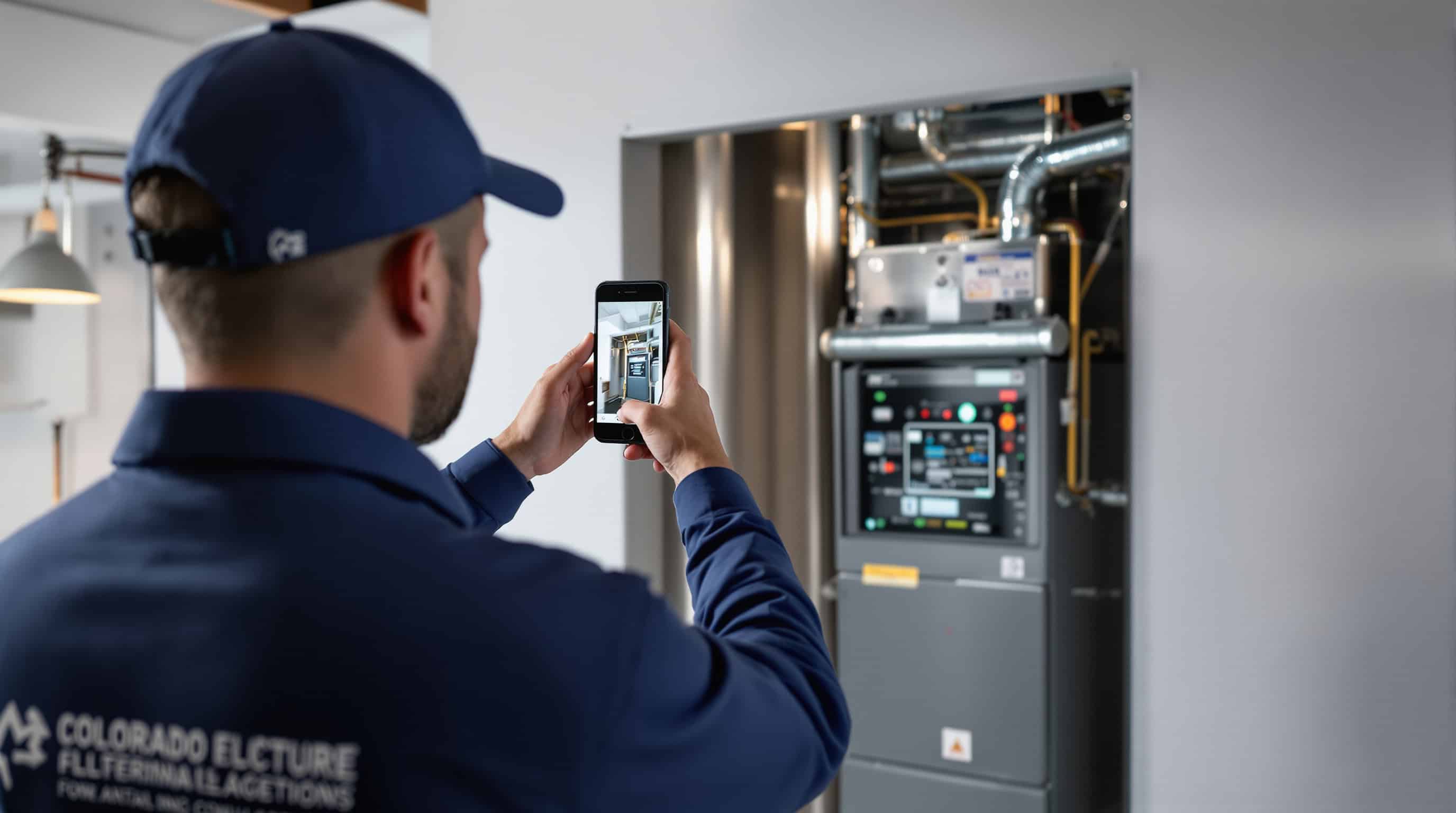
A Fountain roofing contractor posts a job-site photo after every storm cleanup, and by Monday morning three neighbors on the same street have messaged asking for a quote. That is not luck. It is what happens when a service business treats social media as a trust-building tool instead of a place to collect likes. Most Colorado Springs trades and home service owners either avoid social media entirely or post inconsistently with no plan, missing the chance to turn everyday work into visible proof that they show up and do it right.
Key Takeaways
- Social media works for trades when it proves reliability, not when it chases followers: photos of real jobs, real crews, and real neighborhoods build the trust that gets a phone to ring.
- Platform choice should match how homeowners actually search, not what is trendy: Facebook and Google Business Profile updates matter more for most trades than Instagram or TikTok.
- Content should document work already happening, not manufacture new work: a five-minute habit after every job beats a scramble for content ideas once a week.
- A sustainable cadence beats a perfect one: two or three consistent posts a week outperform a burst of ten posts followed by three months of silence.
- Following counts do not pay bills; booked jobs do: the real measure of success is whether social activity moves a prospect toward calling or messaging.
- Owners should outsource the parts that eat time without building skill, and keep the parts that only they can authentically do.
1. Why Most Service Businesses Waste Time on Social Media
Walk through the social media pages of a dozen local plumbers, electricians, or landscapers and a pattern emerges fast: stock photography, generic motivational quotes, and the occasional "we're hiring" post with no engagement. None of it tells a homeowner in Woodland Park or Monument anything useful about whether that business will show up on time and do quality work. The content exists because someone told the owner they needed to "be on social media," not because anyone thought through what the platform is supposed to accomplish for a trade business specifically.
This is the core problem. Social media for a retail brand or a restaurant is often about brand personality and impulse purchases. Social media for a service business is about something entirely different: reducing risk in a high-trust, high-stakes purchase decision. A homeowner choosing a roofer or an HVAC company is not scrolling for entertainment. They are trying to answer one question before they let a stranger into their house or onto their roof: can I trust this company? When a business treats its feed like a billboard instead of a trust document, it wastes the platform's actual strength.
Vanity Metrics Do Not Pay the Bills
Follower counts, likes, and reach numbers feel like progress because platforms are designed to make them feel that way. But a plumbing company with 4,000 followers and zero new service calls traced to social media has not built a marketing channel. It has built an audience with no clear next step. The metric that matters for a service business is far simpler: did this post move someone closer to calling, messaging, or requesting a quote. Everything else is secondary.
Posting Without a Point Undermines Credibility
Inconsistent, purposeless posting can actually hurt a service business more than posting nothing at all. A feed with a burst of activity in March, silence through summer, and a "sorry we've been away" post in October signals disorganization to a homeowner deciding whether to trust that same company with a major home system. Consistency itself becomes part of the trust signal, separate from the content inside any single post.
2. Picking the Right Platforms for Trades and Home Services
Not every platform deserves equal attention from a service business, and spreading thin effort across five channels usually produces worse results than concentrated effort on two. The right starting point is understanding where a Colorado Springs homeowner actually goes when they need a contractor: they search Google, they check reviews, and they often click through to Facebook or a Google Business Profile to see recent activity and photos before they ever consider Instagram or TikTok relevant to a home services decision.
That does not mean visual platforms have no role. A landscaping company or a custom deck builder has genuinely strong visual content, and Instagram can showcase finished projects well. But for most trades, the decision tree should start with the platforms homeowners already use for local decision-making, not the platforms that feel modern or that a competitor happens to be on.
| Platform | Best fit for trades | Why it works |
|---|---|---|
| Google Business Profile | All service businesses | Directly tied to local search and map results; updates and photos build trust at the exact moment someone searches |
| General trades, HVAC, plumbing, roofing, electrical | Homeowner demographic is heavily present; supports local groups and community visibility | |
| Landscaping, remodeling, custom builds, painting | Strong for visually dramatic before-and-after work | |
| Commercial contractors, defense-adjacent trades | Reaches facility managers and procurement contacts, especially useful near Fort Carson or Peterson Space Force Base contracts | |
| Nextdoor | Neighborhood-level home services | High local trust context, good for referral-style visibility |
Google Business Profile Is Not Optional
Many service businesses think of their Google Business Profile as a directory listing rather than a social channel, but it functions as one. Photos, posts, and review responses posted there show up directly in local search and map results, often at the exact moment a prospect is comparing three companies. Frostbyte treats this profile as the anchor of any local social strategy because it sits at the intersection of search visibility and trust signals. Google's own Business Profile guidance confirms that regular updates and complete information influence how a listing performs in local results.
Facebook Still Carries the Homeowner Audience
Despite predictions of its decline, Facebook remains where a large share of homeowners in the Pikes Peak region look for recommendations, join neighborhood groups, and read reviews. A roofing or HVAC company that posts job updates, storm response information, and seasonal maintenance reminders on Facebook is meeting its actual customer where that customer already spends time.
Niche Platforms Deserve a Second Look for Some Trades
A defense-adjacent contractor, a commercial electrician, or a business serving facility managers near Schriever Space Force Base may find more value in LinkedIn than in consumer platforms, since the decision-maker is a procurement contact rather than a homeowner. Matching the platform to the actual buyer, not the trade category in general, is what separates a strategic choice from a default one.
3. Content That Builds Trust Without Feeling Like an Ad
The best-performing content for a service business rarely looks like an advertisement, and that is precisely why it works. A homeowner scrolling Facebook is not looking to be sold to; they are evaluating whether a company seems competent and honest. Content that documents real work, real crews, and real outcomes carries far more persuasive weight than a polished promotional graphic, because it reads as evidence rather than as a pitch.
This does not mean promotional content has no place. A seasonal offer or a reminder about a service has value. But it should be the minority of what a feed publishes, surrounded by content that simply shows the business doing its job well. The ratio matters more than any single post.
Job-Site Photos Are the Highest-Value Content Type
A photo of a technician mid-repair, a crew wrapping up a project, or a before-and-after shot of finished work does more to build trust than almost any other content format available to a service business. It requires no design skill and no copywriting talent, only a habit of pulling out a phone at the right moment. Over months, a feed built on this habit becomes a visual portfolio that answers the trust question before a prospect ever calls.
Behind-the-Scenes Content Humanizes the Business
Showing the team, introducing a new hire, or documenting a truck getting outfitted for a new season gives a homeowner a face to associate with the business before a stranger shows up at their door. In a region with a strong military and veteran business community, highlighting a veteran-owned crew or a team member's service background can resonate particularly well, when it is genuinely true and stated plainly rather than used as a marketing hook.
Educational Content Positions the Business as the Expert
A short post explaining why a furnace makes a particular noise, or what causes ice dams at Colorado Springs' elevation, gives value to a follower whether or not they book a job that week. This kind of content earns saves and shares, which extend reach organically, and it plants the business as the trusted source for the next time a related problem shows up.
4. A Realistic Posting Cadence for Busy Owners
Ask most trade business owners why their social media has gone quiet and the answer is almost always the same: there is no time. That is a legitimate constraint, and any cadence recommendation that ignores it will fail within a month. The goal is not to post as often as possible. The goal is to post as consistently as the business can sustain indefinitely, because consistency itself is what builds algorithmic reach and audience trust over time.
For most service businesses, two to three posts per week is a realistic and effective cadence. That volume is frequent enough to stay visible in a feed algorithm and to signal an active business, but light enough that a busy owner or office manager can maintain it without burning out or falling behind during peak season.
Batch Content Around Existing Work
The most sustainable approach does not treat content creation as a separate task competing for time against the actual work. Instead, it builds a five-minute habit into work that is already happening: a photo at the start of a job, a photo at completion, a quick note about what was done. Batching a week's worth of these moments into two or three scheduled posts on a Friday afternoon turns content creation into a fifteen-minute weekly task rather than a daily burden.
Seasonal Spikes Deserve Extra Attention
Colorado Springs' climate creates natural content opportunities that align with when homeowners are actually thinking about a given trade. A furnace tune-up reminder lands differently in October than in June. A hail-damage response post after a spring storm reaches homeowners at the exact moment they are worried about their roof. Building a loose seasonal calendar around the Front Range's weather patterns, rather than posting the same content year-round, keeps the feed relevant to what a prospect is actually experiencing.
5. Turning Followers Into Booked Jobs
A social media presence that never converts a single follower into a lead has not failed for lack of effort; it has failed for lack of a path. Every post should have an implicit or explicit next step available to someone who is ready to act, and that path needs to be short. A prospect who has to hunt for a phone number or dig through a website to find a contact form will often simply move on to the next company in their search results.
The businesses that convert social activity into booked work treat every platform touchpoint as part of a funnel rather than a standalone activity. A Facebook post links to a simple contact form. A Google Business Profile post includes a call button. An Instagram bio has a booking link, not just a website homepage that requires three more clicks to find contact information.
Respond Fast and Respond Everywhere
Comments and direct messages on social platforms are inbound leads, and they should be treated with the same urgency as a ringing phone. A prospect who comments "how much would this cost for my house" and gets no response within a day or two has effectively been told the business is not paying attention. Fast, helpful responses, even a simple "send us a photo and we'll get you a ballpark," keep momentum that a delayed response kills.
Reviews and Social Proof Reinforce Each Other
A strong Google review presence and an active social feed reinforce one another. A prospect who sees a well-reviewed business also posting recent, real work gets two independent confirmations of the same conclusion: this company is legitimate and active. Encouraging satisfied customers to leave a review shortly after a job, and occasionally sharing a genuine review as a post, connects these two trust signals instead of letting them operate in isolation. The FTC's guidance on endorsements and reviews is worth understanding for any business that shares customer feedback publicly, to keep review practices honest and compliant.
Track What Actually Produces Calls
A simple habit, asking every new customer how they heard about the business, reveals far more than any platform analytics dashboard. If a pattern emerges showing that Facebook job-site posts consistently generate mentions, that is the signal to double down. If a platform never gets mentioned despite regular posting, that is the signal to reallocate effort elsewhere.

6. When to Outsource vs. Manage It Yourself
Some service business owners can and should manage their own social media, at least in the earlier stages of growth. If an owner or a team member already has the habit of taking job-site photos and a modest amount of time each week, in-house management can work well and keeps the voice authentically close to the business. The honest question is not whether outsourcing is inherently better, but whether the time spent produces a return that in-house effort cannot match.
The tipping point usually arrives when growth outpaces the owner's available hours, when the content becomes inconsistent because no one owns it as a defined responsibility, or when the business needs strategic integration between social media, local search visibility, and paid advertising that a part-time in-house effort cannot realistically deliver. That tipping point looks similar to the moment many Colorado Springs businesses recognize they have outgrown DIY marketing more broadly.
| Factor | Manage in-house | Outsource to an agency |
|---|---|---|
| Time available weekly | 1-2 hours consistently available | Little to no consistent time |
| Content source | Owner or staff naturally document work | No one owns the habit of capturing content |
| Strategic integration needed | Social media stands alone | Social needs to connect with SEO, reviews, and paid ads |
| Growth stage | Early stage, building initial presence | Established business ready to scale visibility |
| Comfort with platforms | Owner is reasonably comfortable posting and responding | Platforms feel like a constant chore or afterthought |
The Case for Keeping It In-House
A newer service business with a hands-on owner who genuinely enjoys documenting the work often produces the most authentic content precisely because there is no middleman between the job site and the post. This works well as long as the habit stays consistent and the owner recognizes when growth starts to strain that bandwidth.
The Case for Bringing in Outside Support
Once a business is juggling crew scheduling, hiring, and customer service on top of trying to maintain a content calendar, social media is often the first thing to slip. An agency of record relationship, where one partner manages social media alongside search visibility, reviews, and advertising, keeps these channels working together rather than operating as disconnected tactics competing for the same limited attention. This is where the strategic case for consolidation is strongest: social media rarely performs at its best in isolation from the rest of a business's marketing.
FAQs
Does social media actually generate leads for plumbers, electricians, and other trades?
Yes, when it is used to demonstrate real work and responsiveness rather than to chase followers. Job-site photos, quick replies to comments and messages, and clear contact paths turn casual scrollers into inquiries far more reliably than generic promotional content.
How often should a service business post on social media?
Two to three consistent posts per week is realistic and effective for most trades. A sustainable cadence maintained year-round outperforms a burst of frequent posting followed by long gaps of inactivity.
Which social media platform is best for home service businesses in Colorado Springs?
Google Business Profile and Facebook generally deliver the most value, since that is where local homeowners already search and compare contractors. Visually driven trades like landscaping or remodeling may also benefit from Instagram.
How do I know if my social media is actually working for my business?
Ask new customers how they heard about you and track patterns over time rather than relying on likes or follower growth. If a platform consistently gets mentioned by new customers, it is working; if it never comes up, reconsider the effort spent there.
Should I hire an agency to manage my business's social media?
It depends on available time and how much strategic integration your business needs with search visibility and advertising. If content creation is inconsistent or you lack time to respond to inquiries promptly, outsourcing to a partner who can connect social media with the rest of your marketing is often the better path.
Conclusion
Social media for a Colorado Springs service business succeeds or fails based on one question: does it make a prospective customer trust this company more before they ever pick up the phone. Choosing the platforms where local homeowners already make decisions, documenting real work instead of manufacturing content, keeping a sustainable posting rhythm, and giving every follower a fast, clear path to booking a job are the pieces that turn a feed from a chore into a lead channel. None of it requires viral content or a huge following; it requires consistency and a clear sense of what the channel is actually for.
Frostbyte Creatives works with established Colorado Springs and Pikes Peak region businesses that are ready to stop treating social media as an isolated task and start treating it as one part of a cohesive marketing strategy alongside local search, reviews, and advertising. That integration is where the real return shows up, and it is the kind of work a boutique, locally rooted agency is built to deliver.
Schedule Your Free Strategy Meeting to talk through what your service business's social media should actually be doing for you, and how it can connect to the rest of your local visibility and lead generation strategy.